Healthcare Management Practices Improving Patient Care and System Efficiency
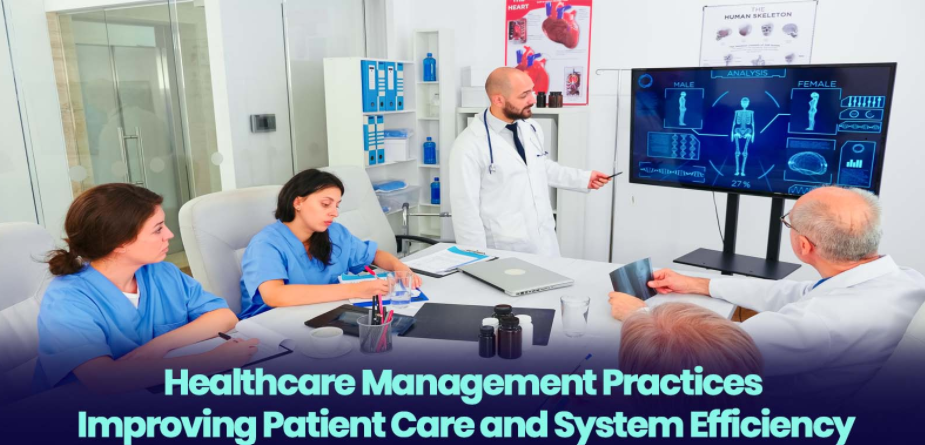
Healthcare is more than treating illness; it is about building systems that consistently deliver safe, reliable, and compassionate care. Strong management saves lives and builds trust. Effective Healthcare Management Practices create a framework where hospitals, clinics, and health organizations operate with precision.
Through their efforts, managers ensure effective resource allocation, employee motivation, and prompt patient interventions. This is achieved by concentrating on leadership and accountability, thereby enabling the healthcare institution to evolve from an unorganized place to a more systematic one, where patients’ welfare becomes a priority.
Patient‑Centered Care
Patient-centered care emphasizes individuality as the main element of healthcare provision. The hospital’s management style aligns with patients’ desires, ensuring everyone feels respected and appreciated. Satisfaction levels in hospitals adopting patient-centered management are high, medical errors have been minimized, and there is greater trust between providers and clients.
Management policies are geared toward listening and an empathic response to patients’ problems. Such an emphasis on meeting patients’ needs makes the healthcare delivery process compassionate. This means that management’s decisions reflect patients’ opinions.
Efficiency in Healthcare Systems
Efficiency in healthcare is about maximizing outcomes with available resources, not cutting corners. Effective Healthcare Management Practices reduce waiting times, streamline workflows, and minimize unnecessary costs. Adoption of such techniques by hospitals results in increased employee morale and enhanced quality of treatment for patients.
Managers ensure that task overlap is minimized, schedules are optimized, and resources and infrastructure are used efficiently. An effective system helps institutions provide services more efficiently. In addition, efficiency creates confidence in patients who feel their time and health are respected.
See also: Supplements Hong Kong: Enhancing Health and Wellness
Academic Support in Healthcare Studies
Healthcare institutions often rely on external support for academic and professional growth. Many students and professionals seek assignment help UK to strengthen their understanding of healthcare systems. The advice provided is supplementary to the training process and ensures that learners learn all about theoretical and practical knowledge of management.
Academic assistance services provide the necessary materials and examples that make sure students will cope with the rigorous programs. Through their combination with the training received in the class, students become aware of the fundamentals of healthcare management.
Technology and Healthcare Management
Technology has made healthcare management much easier than it used to be. The introduction of electronic health records, telemedicine, and AI assisted diagnosis has become key components of contemporary systems. Leaders who use the power of technology develop fast and efficient environments. Technology eliminates paperwork, makes communications smoother, and facilitates decision-making processes.
Patients receive better diagnoses, booking systems are faster and more efficient, and continuity of care is ensured through effective practices. Through the utilization of innovative technology, organizations can increase their capability to respond effectively to various obstacles while delivering high quality results consistently.
Specialized Assistance for Learners
Students pursuing healthcare studies sometimes require specialized guidance. Services such as Healthcare assignment help provide tailored support for complex topics like patient safety, hospital administration, and policy development. The availability of these resources guarantees that learners can make practical application of management theories in the real world. In academic help, students are assisted in overcoming difficulties, solving complicated problems, and creating top-quality content.
With access to such expert advice, learners gain knowledge and become more confident. This kind of support is analogous to healthcare management, where efficiency and accuracy are emphasized for achieving positive results.
Collaboration Across Departments
A healthcare institution runs on cooperation; only by working together can success be achieved. Managers who foster cooperation among doctors, nurses, administrators, and support staff create a smooth experience for their patients. Interdepartmental collaboration increases efficiency and reduces the number of mistakes made.
It is the responsibility of managers to provide avenues for communication, foster teamwork, and resolve any conflicts to achieve success. Collaboration creates a positive working environment within the organization and helps in achieving success. Through collaboration, organizations are motivated to improve because they strive to provide excellent healthcare to their patients.
Addressing Academic Challenges
Healthcare education is demanding, and learners often juggle multiple responsibilities. Some even look for options to pay someone to do my assignment for me when deadlines become overwhelming. Similarly, there is a need to achieve efficiency in management, as seen in healthcare, where maintaining a balance between time and resources is essential.
The role of academic assistance services comes in here, as they help students manage their workload without reducing quality. Through outsourcing work, students engage in practice and training.
Global Perspectives
The management of healthcare facilities may differ by country, but basic aspects such as efficiency and quality of patient care are common to all nations. Organizations worldwide use management strategies that ensure resource effectiveness by properly considering patients’ needs, underscoring the necessity of effective healthcare management in any part of the world.
Global experience helps healthcare facilities improve management and implement innovations, thereby making healthcare management a worldwide issue.
Research and Writing Support
Academic success in healthcare often depends on well‑structured research and writing. Services like dissertation writing service play a crucial role in guiding students through complex projects. The importance of such services lies in enabling the learner to make an argument backed by evidence. In this regard, the services adhere to the same rules of precision and accountability that apply in healthcare management.
In addition, research assistance enables the learner to tackle difficult issues, organize information, and present research findings clearly.
Conclusion
Healthcare thrives when management is strong. Effective Healthcare Management Practices not only improve patient care but also enhance system efficiency.
Incorporating technology, education, collaboration, and responsible leadership in the health sector creates an environment that makes patients feel secure and respected. Good management ensures that each step adds value, creating reliable healthcare practices.
The success of healthcare systems depends on the strength of their management practices, proving that leadership and organization are as vital as medical expertise in delivering quality care.