What Are the Best AR Glasses for Content Creators and Filmmakers
Smart glasses have evolved from novelty wearables into legitimate production tools. For creators who shoot hands-free, finding the best smart glasses for filming in 2026 means weighing camera resolution, AR display capability, and onboard AI against real-world factors like comfort and battery life.
This guide breaks down what filmmakers should prioritize when choosing the best AR glasses available today. The market has split into camera-equipped models for POV capture and display-focused AR glasses for on-location footage review — each serving a distinct stage of the production workflow.
Why Creators Are Moving Beyond Action Cameras
GoPros and smartphone gimbals dominated creator workflows for years. But they occupy at least one hand, block natural eye contact with subjects, and produce footage that looks machine-mounted rather than human. Wearable cameras built into eyewear frames eliminate all three problems.
The shift explains why demand for the best AR glasses has accelerated among professional creators. Models with built-in displays let filmmakers monitor framing without pulling out a phone — a feedback loop that changes how you shoot on set.
Standalone AI adds another dimension to smart glasses for filming. Onboard processors can transcribe interviews, identify subjects, and translate signs while recording. A single wearable now replaces a camera, a field monitor, and a translation app in a creator’s kit.
What Separates the Best Smart Glasses for Filming
Not every pair of smart glasses works as a filmmaker’s daily driver. When evaluating the best smart glasses for filming, five technical specs consistently determine whether a device improves your workflow or just adds weight to your face.
Camera Resolution and Sensor Quality
The sensor defines your ceiling. A 12MP camera with 4K or 3K video captures enough detail for YouTube, social reels, and professional client work. Models capped at 1080p limit cropping flexibility and color-grading headroom in post-production significantly.
Built-In AR Display
A display inside the lens lets you monitor what the camera sees and read AI-generated prompts without reaching for your phone. AR glasses without displays force blind shooting — workable for casual clips, but a serious limitation for filmmakers who need compositional control.
AI and Onboard Processing
Real-time transcription, object recognition, and live translation turn passive recording into active production. Standalone processors like the Qualcomm Snapdragon AR1 handle these tasks entirely on-device, keeping the creator’s hands free and their smartphone battery untouched.
Weight and Extended Wear
Anything above 80 grams causes noticeable fatigue during multi-hour shoots. The lightest camera-equipped filming glasses on the market currently weigh between 53 and 76 grams — close enough to standard eyewear that extended shooting sessions remain comfortable throughout a full production day.
Battery and Connectivity
Display glasses and filming smart glasses consume power at different rates. Phone-dependent models like the Meta Ray-Bans deliver 6–8 hours on a single charge. Standalone AR glasses with onboard processing typically run shorter. A compact power bank remains standard for all-day shoots.
How the Top Contenders Compare
Three camera-equipped smart glasses compete directly for content creators in 2026. Each targets a distinct filming workflow, from quick social clips to structured documentary production. The comparison below highlights specs that separate capable filming tools from casual wearables.
| Feature | RayNeo X3 Pro | Meta Ray-Ban Gen 2 | Oakley Meta Vanguard |
|---|---|---|---|
| Camera | 12MP Sony IMX681, 4K/3K | 12MP, 3K video | 12MP, 3K video |
| AR Display | Binocular Micro-LED waveguide | None | None |
| AI Engine | Google Gemini (standalone) | Meta AI (phone-dependent) | Meta AI (phone-dependent) |
| Weight | ~76g | ~53g | ~66g |
| Battery | Standalone (TBD) | 6–8 hours | Up to 9 hours |
| Translation | 14-language HUD overlay | No HUD overlay | No HUD overlay |
| Rx Lenses | Supported | Supported | Supported |
| Price | $1,299 | From $379 (Wayfarer) | $499 |
RayNeo X3 Pro
The X3 Pro pairs a Sony IMX681 12MP sensor with a binocular Micro-LED waveguide display and Google Gemini AI. At $1,299, it is the priciest option here but also the only one offering POV capture with real-time HUD monitoring and 14-language translation in a 76-gram standalone package.
Meta Ray-Ban Gen 2
Meta’s second-generation Wayfarer records 3K video through a 12MP camera and looks indistinguishable from standard sunglasses. Battery life reaches 6–8 hours, and prescription lenses are supported. It lacks an AR display and depends on a paired smartphone, but Meta’s mature sharing ecosystem makes it the fastest path from capture to social post.
Oakley Meta Vanguard
The Vanguard shares Meta’s 12MP camera platform but wraps it in an IP67-rated sport frame with Garmin and Strava integration. Battery life reaches up to 9 hours, and prescription lenses are available. It lacks a display, but for action and outdoor filming, its durability and long runtime justify the $499 price.
Best AR Glasses for Field Monitoring
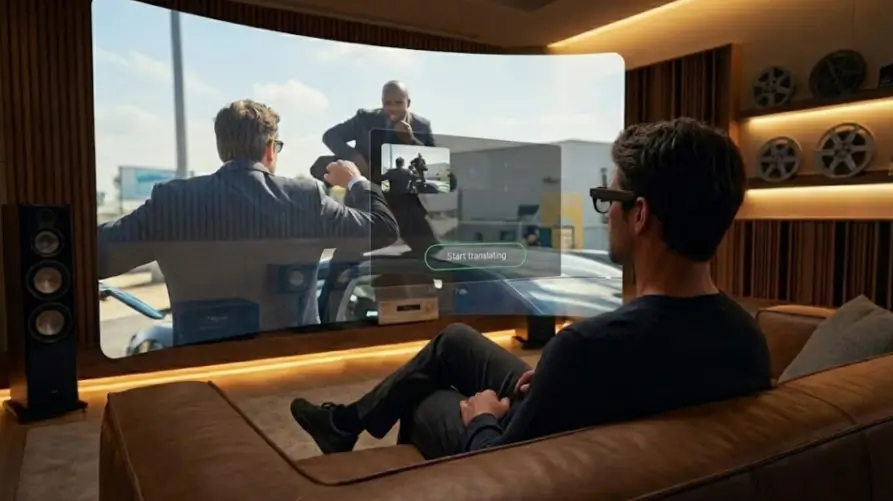
Not all creator workflows center on capture. Reviewing footage on location traditionally required a laptop or a cramped phone screen. Display-focused AR glasses now give filmmakers a portable screening room they can wear on their face during any break between takes.
RayNeo Air 4 Pro
The Air 4 Pro projects a 201-inch virtual display with HDR10 support — a first for AR display glasses, according to RayNeo. Audio is tuned by Bang & Olufsen. At 76 grams with 1080p per eye at 120Hz, it works well as an on-location review screen, though reviewers note some edge blur.
Xreal 1S
Xreal’s latest offers a 500-inch virtual screen at 1200p resolution with 120Hz refresh and built-in Bose speakers. The 1S is a tethered display that draws power from the connected device via USB-C — no built-in battery. It lacks HDR10, but its 52-degree field of view appeals to creators who prioritize screen size.
See also: Collision Repair in Powhatan: How Local Shops Bring Your Car Back to Life
Matching AR Glasses to Your Creator Workflow
Different production styles demand different smart glasses for filming. The best AR glasses for your setup depend entirely on where you spend the most time in the production pipeline and what bottleneck you want to eliminate first.
Capture-First Workflows
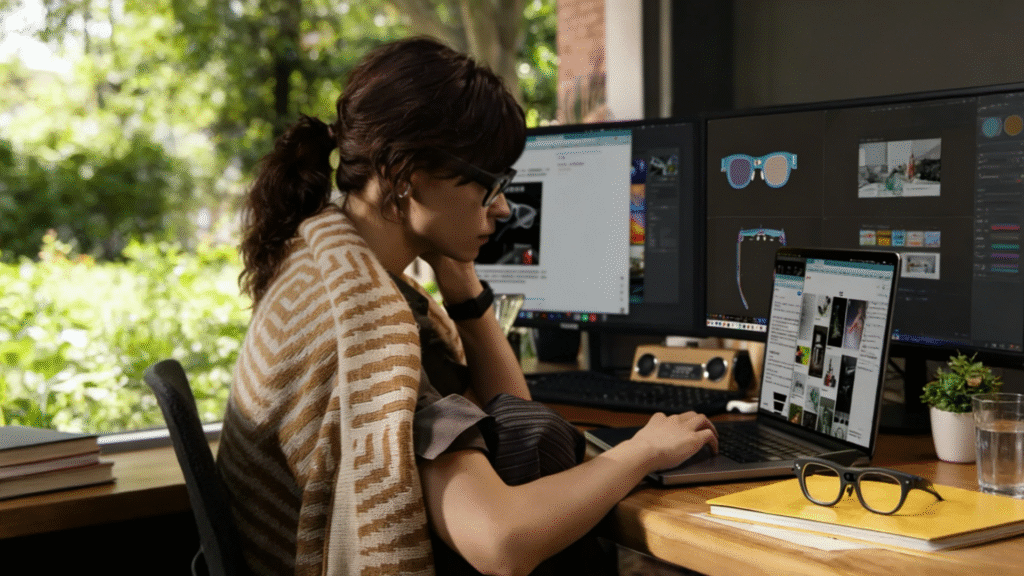
POV vloggers and travel creators benefit most from camera-equipped smart glasses with a built-in display. The RayNeo X3 Pro captures hands-free 4K footage while its HUD translates menus, signs, and conversations in 14 languages — no second device needed.
Review-First Workflows
Creators who shoot on dedicated cameras but need a portable screening solution should consider display-focused wearables. The RayNeo Air 4 Pro turns any location into a color-accurate HDR10 review station with Bang & Olufsen audio monitoring.
Quick-Reference: Picking by Scenario
- Social-first short-form — Meta Ray-Ban Gen 2 for 3K clips shared directly to Instagram and WhatsApp
- Documentary and structured production — RayNeo X3 Pro for POV capture with real-time AI transcription
- Action and sport content — Oakley Meta Vanguard with IP67 protection and slow-motion recording
Regardless of category, every creator shopping for smart glasses should weigh these three factors before purchasing. Getting this checklist right prevents a costly mismatch between your production needs and the device you carry every day on set:
- Decide whether you need a camera, a display, or both for your primary content format
- Check device weight against your typical shoot duration to prevent onset fatigue
- Confirm compatibility with your editing software, phone OS, and existing production gear
The Bottom Line
The best smart glasses for filming in 2026 depend on your role in the production pipeline. For POV capture with a built-in AR display, the RayNeo X3 Pro bundles camera, HUD, and standalone AI in a form factor that no competing glasses currently replicate.
For on-location footage review, the Air 4 Pro brings HDR10 to a display category where most competitors still top out at SDR. Together, the two devices cover capture and review in a kit lighter than a single traditional field monitor.